Office Clearances in Commercial Waste Disposal

Understanding Office Clearances
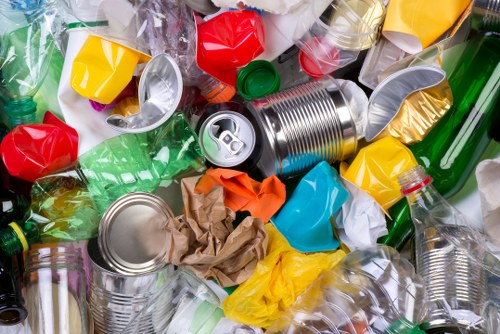
A close-up view of a pile of mixed waste materials, primarily consisting of crushed and intact plastic bottles in green, clear, and colored varieties, with some cans made of tin or aluminium, including a prominent silver can with an open tab on top. The waste is spread across a flat surface, likely pavement or a collection area, with some crumpled paper and plastic wrappings visible among the bottles and cans. The textures include shiny, smooth plastic surfaces and metallic finishes of the cans, with varying colours such as red, yellow, green, and transparent. The background lacks distinct features but suggests an outdoor or industrial environment typical for rubbish collection or disposal sites, possibly in an urban area like London, where Commercial Waste Disposal London operates. The composition indicates sorting or preparation for rubbish removal services, highlighting the importance of proper waste management for sustainability and cleanliness.

Office clearances are a critical component of commercial waste disposal, ensuring that businesses manage their waste efficiently and responsibly. Proper office clearance not only helps maintain a clean and organized workspace but also contributes to environmental sustainability. In today's business landscape, where efficiency and eco-friendliness are paramount, understanding the nuances of office clearances has become essential for companies of all sizes.

Effective office clearance involves the systematic removal of unwanted items, whether they are old furniture, outdated electronics, or general office waste. This process requires a structured approach to ensure that everything is disposed of correctly, recycling is maximized, and hazardous materials are handled safely. Companies that prioritize proper office clearances often see a significant improvement in workplace organization and overall productivity.

Moreover, office clearances play a vital role in compliance with local regulations and environmental laws. Businesses must adhere to specific guidelines regarding waste disposal to avoid legal complications and potential fines. By partnering with professional waste disposal services, companies can ensure that their clearance activities are both compliant and efficient.

Types of Commercial Waste
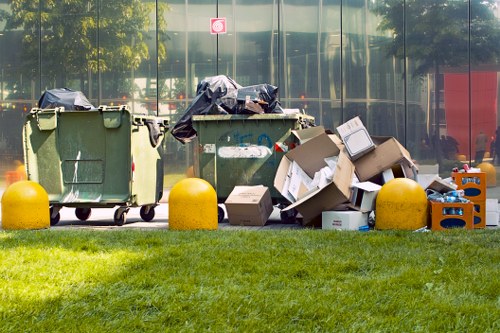
A row of two large green wheelie bins and a pile of cardboard boxes and mixed rubbish on the pavement outside a modern glass-fronted building, with yellow bollards separating the waste area from the grassy verge. The cardboard boxes are partly flattened and stacked, some open with visible contents, while the rubbish includes black plastic bags and various items, indicating waste awaiting collection. Behind the waste containers, there are reflections of trees and urban surroundings on the glass façade, suggesting a business district or commercial area possibly within London. The scene is lit by natural daylight, highlighting the textures of the cardboard, plastic, and metallic bin surfaces. This outdoor rubbish display relates to the services provided by Commercial Waste Disposal London, specialising in rubbish clearance and waste management for commercial clients in the locality and the surrounding areas of London, including regions near the postcode implied by the page title and URL.

Commercial waste from offices encompasses a wide range of materials, each requiring different disposal methods. Identifying and categorizing this waste is the first step in developing an effective clearance strategy. The primary types of office waste include paper products, electronics, furniture, kitchen waste, and hazardous materials.

Paper Products: Despite the digital age, paper remains a staple in many offices. This includes documents, reports, brochures, and packaging materials. Recycling is the most common method of disposal for paper waste, helping reduce the demand for virgin materials and minimizing landfill use.

Electronics: Outdated or non-functional electronic devices like computers, printers, and phones contribute to e-waste. Proper disposal is crucial due to the presence of hazardous materials such as lead, mercury, and cadmium, which can pose environmental and health risks if not handled correctly.

The Clearance Process
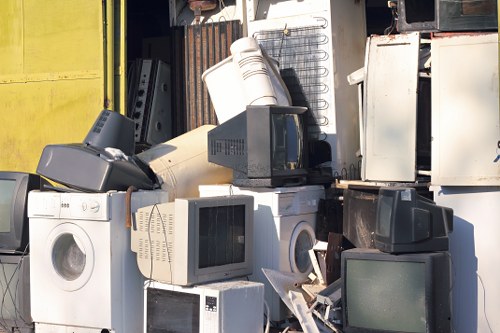
A collection of discarded household appliances and electronic waste stacked outdoors, including washing machines, televisions, oven parts, and a white plastic bucket, positioned closely together on a paved surface with a metal storage unit or shed in the background. The appliances display varied textures and finishes, such as smooth metal surfaces, plastic casings, and glass screens, with some items showing signs of dirt or wear. The scene appears to be part of a rubbish removal process, consistent with the services provided by Commercial Waste Disposal London, possibly situated within a London suburb or industrial area. The arrangement of the waste items suggests that they are awaiting collection or recycling, highlighting the importance of professional waste management for commercial or household clearance tasks in the local area.

The office clearance process involves several steps to ensure that waste is managed efficiently and responsibly. It begins with a comprehensive assessment of the office space to identify the types and volumes of waste generated. This assessment helps in planning the appropriate disposal methods and scheduling pickups.

Once the assessment is complete, the next step is the actual removal of items. This can include anything from clearing out old furniture during a relocation to disposing of regular office waste. Professional waste disposal services often provide trained personnel to handle this process, ensuring that items are sorted and disposed of according to their specific requirements.

After removal, waste items are transported to designated facilities where they are either recycled, repurposed, or disposed of safely. Documentation of the entire process is essential for maintaining records and ensuring compliance with environmental regulations.

Benefits of Professional Clearance Services
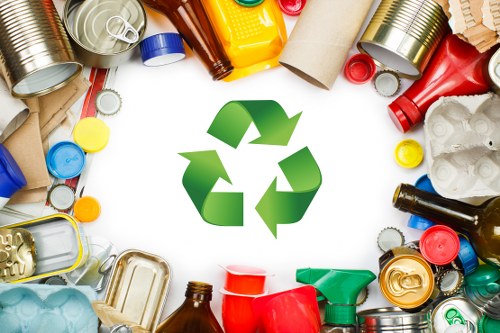
A collection of various recyclable waste items including aluminium cans, plastic bottles, cardboard tubes, and plastic containers, arranged in a circular pattern on a white background with a prominent green recycling symbol in the centre. The waste materials display different textures and finishes, such as shiny metal, matte plastic, and rough cardboard, with some cans and bottles lying on their sides or upright. The scene highlights typical household and office rubbish that Commercial Waste Disposal London might handle in London, subtly referencing local waste management needs. The image emphasizes the importance of thoughtful disposal and recycling practices for sustainable business operations, fitting with the theme of office clearance strategies and rubbish removal services in the area. The arrangement suggests an organized approach to waste sorting, with environmental responsibility at its core, and underlines the company's expertise in managing diverse waste streams efficiently across the London region, including areas around postcode sections suggested in the page context.

Engaging professional office clearance services offers numerous advantages. Firstly, it ensures that waste is handled by experts who are knowledgeable about the latest disposal regulations and best practices. This expertise minimizes the risk of non-compliance and potential fines.

Secondly, professional services often provide comprehensive solutions tailored to a company's specific needs. Whether it's a one-time clearance during an office move or ongoing waste management, these services can be customized to fit the unique requirements of any business.

Additionally, using professional clearance services can lead to cost savings. By optimizing waste disposal processes and improving recycling rates, companies can reduce the overall costs associated with waste management. Furthermore, a well-organized workspace resulting from regular clearances can enhance employee productivity and morale.

Environmental Considerations
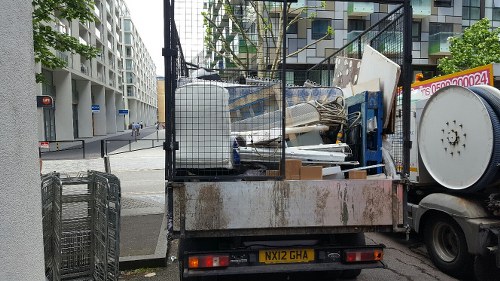
A flatbed waste collection vehicle parked on a city street, loaded with various discarded items including a large white appliance or piece of furniture, metal and plastic debris, and a blue container. The vehicle is positioned on a paved surface with a black metal fence partially visible at the back, and the surrounding environment includes modern white and glass residential or commercial buildings with multiple windows. The scene is set during daylight, with natural light illuminating the collection process, suggesting an urban area that could be near a business or residential block in London. The vehicle's rusted metal parts show signs of regular use, aligning with the services offered by Commercial Waste Disposal London, specialising in rubbish removal and office clearance tasks within the local area.

Environmental sustainability is a significant factor driving the importance of proper office clearances. Businesses are increasingly recognizing their role in protecting the environment and are seeking ways to minimize their ecological footprint. Effective waste management is a key component of these sustainability efforts.

Recycling and repurposing are central to environmentally friendly waste disposal. By diverting waste from landfills, companies help conserve natural resources and reduce greenhouse gas emissions. Additionally, responsible disposal of hazardous materials ensures that harmful substances do not contaminate the environment.

Moreover, adopting green clearance practices can enhance a company's reputation. Consumers and partners are more likely to support businesses that demonstrate a commitment to environmental stewardship. This positive image can lead to increased customer loyalty and competitive advantage in the marketplace.

Cost Factors in Office Clearances

A close-up view of a pile of mixed waste materials, primarily consisting of crushed and intact plastic bottles in green, clear, and colored varieties, with some cans made of tin or aluminium, including a prominent silver can with an open tab on top. The waste is spread across a flat surface, likely pavement or a collection area, with some crumpled paper and plastic wrappings visible among the bottles and cans. The textures include shiny, smooth plastic surfaces and metallic finishes of the cans, with varying colours such as red, yellow, green, and transparent. The background lacks distinct features but suggests an outdoor or industrial environment typical for rubbish collection or disposal sites, possibly in an urban area like London, where Commercial Waste Disposal London operates. The composition indicates sorting or preparation for rubbish removal services, highlighting the importance of proper waste management for sustainability and cleanliness.

Understanding the cost factors associated with office clearances is crucial for budgeting and financial planning. Several elements influence the overall cost, including the volume of waste, the types of materials being disposed of, and the frequency of clearances.

Volume of Waste: The amount of waste generated directly impacts the cost. Larger volumes require more resources for transportation, labor, and disposal, leading to higher expenses. Accurate estimation of waste volume helps in obtaining precise quotes from service providers.

Type of Materials: Different materials incur varying disposal costs. For example, recycling paper is generally less expensive than disposing of electronic waste, which may require specialized handling and processing.

Choosing the Right Waste Disposal Partner

A row of two large green wheelie bins and a pile of cardboard boxes and mixed rubbish on the pavement outside a modern glass-fronted building, with yellow bollards separating the waste area from the grassy verge. The cardboard boxes are partly flattened and stacked, some open with visible contents, while the rubbish includes black plastic bags and various items, indicating waste awaiting collection. Behind the waste containers, there are reflections of trees and urban surroundings on the glass façade, suggesting a business district or commercial area possibly within London. The scene is lit by natural daylight, highlighting the textures of the cardboard, plastic, and metallic bin surfaces. This outdoor rubbish display relates to the services provided by Commercial Waste Disposal London, specialising in rubbish clearance and waste management for commercial clients in the locality and the surrounding areas of London, including regions near the postcode implied by the page title and URL.

Selecting the appropriate waste disposal partner is essential for ensuring effective office clearances. When evaluating potential service providers, consider factors such as experience, reputation, range of services, and compliance with environmental regulations.

It's also important to assess the flexibility and scalability of the services offered. A reliable partner should be able to accommodate changes in your business needs, whether it's a sudden increase in waste volume or the need for specialized disposal methods.

Furthermore, customer support and responsiveness are critical. A waste disposal company that communicates clearly and promptly can help streamline the clearance process, making it as seamless as possible for your business.

Implementing Effective Waste Management Policies

A collection of discarded household appliances and electronic waste stacked outdoors, including washing machines, televisions, oven parts, and a white plastic bucket, positioned closely together on a paved surface with a metal storage unit or shed in the background. The appliances display varied textures and finishes, such as smooth metal surfaces, plastic casings, and glass screens, with some items showing signs of dirt or wear. The scene appears to be part of a rubbish removal process, consistent with the services provided by Commercial Waste Disposal London, possibly situated within a London suburb or industrial area. The arrangement of the waste items suggests that they are awaiting collection or recycling, highlighting the importance of professional waste management for commercial or household clearance tasks in the local area.

Developing and implementing effective waste management policies is a proactive approach to maintaining an organized and sustainable office environment. These policies serve as guidelines for employees, ensuring that waste is disposed of correctly and efficiently.

Employee Training: Educating employees about waste segregation and proper disposal methods is fundamental. Regular training sessions can help reinforce the importance of waste management and encourage responsible behavior in the workplace.

Waste Reduction Strategies: Implementing strategies to reduce waste generation can significantly impact overall waste management efforts. This includes practices such as minimizing paper usage through digitalization, reusing office supplies, and opting for eco-friendly products.

Technological Advancements in Waste Disposal

A collection of various recyclable waste items including aluminium cans, plastic bottles, cardboard tubes, and plastic containers, arranged in a circular pattern on a white background with a prominent green recycling symbol in the centre. The waste materials display different textures and finishes, such as shiny metal, matte plastic, and rough cardboard, with some cans and bottles lying on their sides or upright. The scene highlights typical household and office rubbish that Commercial Waste Disposal London might handle in London, subtly referencing local waste management needs. The image emphasizes the importance of thoughtful disposal and recycling practices for sustainable business operations, fitting with the theme of office clearance strategies and rubbish removal services in the area. The arrangement suggests an organized approach to waste sorting, with environmental responsibility at its core, and underlines the company's expertise in managing diverse waste streams efficiently across the London region, including areas around postcode sections suggested in the page context.

Technological advancements have revolutionized the waste disposal industry, offering innovative solutions for office clearances. From automated sorting systems to advanced recycling techniques, technology enhances the efficiency and effectiveness of waste management processes.

For instance, digital tracking systems allow businesses to monitor their waste output in real-time, providing valuable data for optimizing clearance schedules and reducing waste. Additionally, advancements in recycling technology enable the processing of a wider range of materials, increasing the overall recycling rate and promoting a circular economy.

Moreover, eco-friendly disposal methods, such as composting organic waste and using biodegradable materials, are becoming increasingly accessible thanks to technological innovations. These methods not only reduce environmental impact but also align with sustainable business practices.

Legal and Regulatory Compliance

A flatbed waste collection vehicle parked on a city street, loaded with various discarded items including a large white appliance or piece of furniture, metal and plastic debris, and a blue container. The vehicle is positioned on a paved surface with a black metal fence partially visible at the back, and the surrounding environment includes modern white and glass residential or commercial buildings with multiple windows. The scene is set during daylight, with natural light illuminating the collection process, suggesting an urban area that could be near a business or residential block in London. The vehicle's rusted metal parts show signs of regular use, aligning with the services offered by Commercial Waste Disposal London, specialising in rubbish removal and office clearance tasks within the local area.

Compliance with legal and regulatory requirements is a crucial aspect of office clearances. Businesses must navigate a complex landscape of local, state, and federal regulations governing waste disposal to avoid legal repercussions and ensure ethical operations.

Understanding Regulations: It's essential to stay informed about the specific waste disposal laws applicable to your region and industry. This includes knowing the guidelines for handling hazardous materials, electronic waste, and recyclable items.

Documentation and Reporting: Maintaining accurate records of waste disposal activities is often required by law. Detailed documentation helps demonstrate compliance and can be invaluable in the event of an audit or inspection.

Sustainability and Corporate Responsibility

A close-up view of a pile of mixed waste materials, primarily consisting of crushed and intact plastic bottles in green, clear, and colored varieties, with some cans made of tin or aluminium, including a prominent silver can with an open tab on top. The waste is spread across a flat surface, likely pavement or a collection area, with some crumpled paper and plastic wrappings visible among the bottles and cans. The textures include shiny, smooth plastic surfaces and metallic finishes of the cans, with varying colours such as red, yellow, green, and transparent. The background lacks distinct features but suggests an outdoor or industrial environment typical for rubbish collection or disposal sites, possibly in an urban area like London, where Commercial Waste Disposal London operates. The composition indicates sorting or preparation for rubbish removal services, highlighting the importance of proper waste management for sustainability and cleanliness.

Sustainability and corporate responsibility are integral to modern business practices, and effective office clearances play a pivotal role in these initiatives. By adopting sustainable waste management practices, companies demonstrate their commitment to environmental stewardship and social responsibility.

Implementing green clearance strategies not only benefits the environment but also enhances a company's brand image and reputation. Consumers and stakeholders increasingly prefer businesses that prioritize sustainability, leading to improved customer loyalty and potential market growth.

Furthermore, sustainable waste management can contribute to long-term cost savings and operational efficiencies. Reducing waste generation, increasing recycling rates, and optimizing disposal processes help minimize expenses and support financial sustainability.

Future Trends in Office Waste Disposal

A row of two large green wheelie bins and a pile of cardboard boxes and mixed rubbish on the pavement outside a modern glass-fronted building, with yellow bollards separating the waste area from the grassy verge. The cardboard boxes are partly flattened and stacked, some open with visible contents, while the rubbish includes black plastic bags and various items, indicating waste awaiting collection. Behind the waste containers, there are reflections of trees and urban surroundings on the glass façade, suggesting a business district or commercial area possibly within London. The scene is lit by natural daylight, highlighting the textures of the cardboard, plastic, and metallic bin surfaces. This outdoor rubbish display relates to the services provided by Commercial Waste Disposal London, specialising in rubbish clearance and waste management for commercial clients in the locality and the surrounding areas of London, including regions near the postcode implied by the page title and URL.

The landscape of office waste disposal is continually evolving, driven by technological advancements, regulatory changes, and shifting societal values. Staying abreast of future trends is essential for businesses aiming to maintain efficient and sustainable waste management practices.

Increased Automation: The integration of automation and artificial intelligence in waste management is expected to grow, enhancing sorting accuracy, reducing labor costs, and improving overall efficiency. Automated systems can handle large volumes of waste with greater precision, facilitating higher recycling rates.

Circular Economy Models: The shift towards circular economy models emphasizes the reuse and recycling of materials to create closed-loop systems. This approach minimizes waste generation and promotes the sustainable use of resources, aligning with global sustainability goals.

Conclusion

A collection of discarded household appliances and electronic waste stacked outdoors, including washing machines, televisions, oven parts, and a white plastic bucket, positioned closely together on a paved surface with a metal storage unit or shed in the background. The appliances display varied textures and finishes, such as smooth metal surfaces, plastic casings, and glass screens, with some items showing signs of dirt or wear. The scene appears to be part of a rubbish removal process, consistent with the services provided by Commercial Waste Disposal London, possibly situated within a London suburb or industrial area. The arrangement of the waste items suggests that they are awaiting collection or recycling, highlighting the importance of professional waste management for commercial or household clearance tasks in the local area.

Office clearances are a fundamental aspect of commercial waste disposal, impacting not only the cleanliness and organization of the workplace but also the broader environmental footprint of a business. By understanding the types of office waste, implementing effective clearance processes, and partnering with professional waste disposal services, companies can achieve efficient and sustainable waste management.

Emphasizing environmental considerations, compliance with regulations, and the adoption of advanced technologies ensures that office clearances contribute positively to both business operations and the planet. As the importance of sustainability continues to grow, investing in proper office clearance strategies becomes increasingly vital for long-term success and corporate responsibility.

Contact us today to learn more about our comprehensive office clearance services and how we can help your business maintain a clean, organized, and sustainable workspace.

Frequently Asked Questions

We utilize state-of-the-art equipment and industry-approved methods to ensure efficient and safe office clearances. Our team is trained in the latest techniques to handle all types of office materials, ensuring minimal disruption to your workspace. Contact our team for a quick quote and experience the best in office clearance services.

Yes, our team holds accreditations from leading industry bodies, demonstrating our commitment to maintaining high standards in office clearance services. These accreditations ensure that we adhere to best practices and deliver trusted, reliable service every time. Reach out to us today to learn more about our certified expertise.

Absolutely. We are fully certified and insured, ensuring that all office clearances are conducted in compliance with legal requirements. Our certifications guarantee that we follow strict safety and environmental guidelines, giving you peace of mind. Get in touch with us for an affordable and compliant clearance solution.

We prioritize environmental responsibility by recycling up to 80% of materials from office clearances. Our sustainable practices reduce waste and support eco-friendly initiatives. Choosing our services means contributing to a greener planet. Contact our eco-conscious team for your next office clearance.

With over 15 years of experience in the industry, we have a proven track record of delivering reliable and efficient office clearance services. Our extensive experience ensures that we handle your clearance needs with professionalism and expertise. Schedule your clearance with our trusted team today.

Yes, we prioritize safety and affordability in all our office clearance services. Our trained professionals follow strict safety protocols to protect your workspace, while offering competitive pricing to fit your budget. Experience safe and cost-effective clearances by contacting our team for a free estimate.

We are a licensed office clearance provider serving multiple locations. Our widespread presence ensures that you can access trusted and professional clearance services in your area. Check our service locations and reach out to our local team for prompt assistance.

Transparency and trust are cornerstones of our office clearance services. We provide clear pricing, detailed service plans, and regular updates throughout the clearance process. Our customer reviews and industry accreditations further establish our reliability. Contact us to experience our honest and dependable service.

Yes, our office clearance solutions are designed with ethical practices in mind. We ensure fair treatment of all materials, prioritize recycling, and support charitable donations when possible. Our commitment to ethics ensures that your clearance is handled responsibly. Get in touch to learn more about our ethical approach.

Our office clearance services are backed by certifications such as ISO 9001 and environmental management standards, ensuring compliance with all legal and regulatory requirements. These certifications reflect our dedication to quality and lawful operations. Reach out for certified and compliant clearance services.

We understand the importance of confidentiality when clearing office spaces. Our trained professionals handle all materials with utmost discretion, adhering to strict privacy protocols to protect your sensitive information. Trust our secure and confidential clearance services by contacting our team today.

We proudly recycle over 75% of materials from office clearances, minimizing waste and promoting sustainability. Our commitment to high recycling rates ensures that your clearance has a positive environmental impact. Choose our eco-friendly services and help us create a greener future.
Commercial Waste Disposal London

Explore the importance, types, and processes of office clearances in commercial waste disposal, highlighting benefits, environmental considerations, and future trends.

Get a Quote

Get In Touch With Us.

Please fill out the form below to send us an email and we will get back to you as soon as possible.