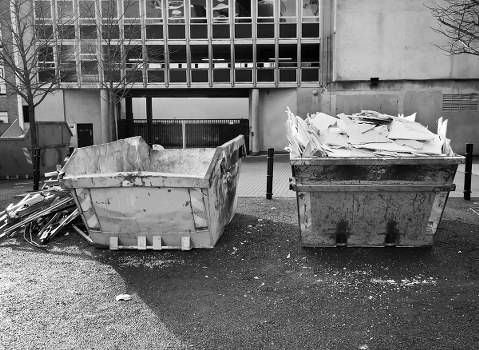
Health & Safety Policy for Commercial Waste Disposal London
Policy statement: Our organisation is committed to maintaining the highest standards of health and safety in the provision of commercial waste disposal and related services. This policy applies to all employees, contractors and subcontractors engaged in commercial refuse removal London operations. We recognise that effective commercial waste management in London requires clear leadership, consistent procedures and ongoing risk control. The aim is to protect people, property and the environment while delivering reliable business waste disposal in London.Scope and objectives
This policy covers collections, transfer, storage, recycling and disposal processes for commercial waste services London. Objectives include preventing injury and ill health, reducing environmental harm, ensuring safe vehicle and plant use, and promoting safe manual handling. The policy supports compliance with statutory standards and good practice for commercial waste disposal companies operating in urban environments. Everyone involved in the waste chain must understand hazards, follow controls and report concerns so we can maintain a safe working culture.
Risk assessment and control measures
Risk assessments are carried out for all routine and non-routine tasks related to commercial waste removal London. Assessments identify hazards such as sharps, chemicals, traffic, manual handling and confined spaces. Controls include task-specific procedures, appropriate containment, segregation of hazardous materials, clear labelling and secure temporary storage. We employ a hierarchy of controls: elimination, substitution, engineering controls, administrative controls and PPE. Controls are reviewed whenever work changes or after incidents to ensure continuous improvement in safety performance.
Operational procedures
Operational standards govern site safety, vehicle loading and unloading, waste segregation and recycling. A standard checklist ensures vehicles are roadworthy before departure and that load security prevents spillage. Drivers and handlers must follow designated routes and avoid obstructing pedestrian access. Work zones are clearly marked and traffic management measures implemented where collections occur near public thoroughfares. The following core controls are mandatory:- Pre-shift vehicle checks including brakes, lights and load restraints.
- Use of sealable containers to prevent leakage and pest attraction.
- Segregation of hazardous wastes with clear labelling and secure storage.
All staff and contractors must demonstrate competence prior to independent work. Permit-to-work systems are used for high-risk tasks and contractors must meet our safety requirements before access is granted. We foster a collaborative approach with site managers to ensure safe handover and adherence to on-site rules for commercial waste collection and disposal services.

Training, competency and supervision
A robust training programme underpins safe operations for commercial waste management London. Training covers manual handling, sharps awareness, chemical hazards, vehicle safety, lifting equipment and emergency procedures. New starters receive induction training and supervised practical coaching. Refresher training is scheduled regularly and when procedural changes occur. Supervisors are responsible for confirming competence and for providing on-the-job mentoring. We maintain records of training, licences and qualifications to ensure that personnel conducting commercial refuse removal tasks are suitably prepared and assessed.
Personal protective equipment and health surveillance
Appropriate PPE is supplied and maintained for all waste handling tasks; examples include cut-resistant gloves, hi-vis clothing, respiratory protection where needed, and safety footwear. PPE selection is based on risk assessment outcomes and must be worn and cared for in accordance with manufacturer guidance. Occupational health support is available to staff with exposure risks; health surveillance is provided where appropriate to detect early signs of work-related ill health.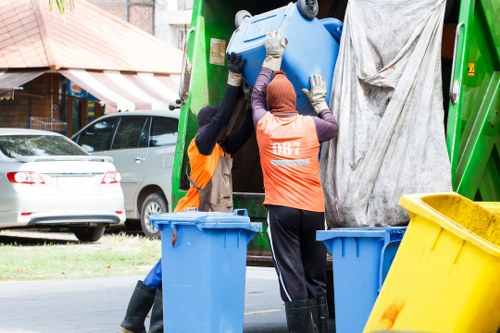
Vehicles, plant and equipment
Vehicles and mechanical handling equipment are maintained to safe standards through a planned maintenance regime. Operators must be trained and authorised for specific plant. Loading operations are planned to balance stability and avoid manual overexertion. Lock-out and tag-out procedures apply during maintenance. Spill kits and absorbents are carried on vehicles to manage accidental releases and reduce environmental impact during commercial waste transport and transfer.
Site operations and contractor management
Site-specific rules are implemented at client locations to ensure safe interfaces between our teams and other site users. Contractor selection includes evaluation of safety performance and methodology. Inductions and risk briefings are completed before commencement, and ongoing supervision verifies compliance. Incident learning and shared safety communications with clients help to reduce risk during joint operations related to commercial waste services.
Incident reporting, investigation and emergency response
All accidents, near misses and dangerous occurrences are reported promptly. Investigations identify root causes and corrective actions are implemented to prevent recurrence. Emergency procedures cover spill response, first aid, fire and incidents involving hazardous materials. Regular drills test responses and improve readiness. Lessons learned feed back into training, risk assessments and operational procedures, strengthening resilience across the commercial waste disposal process.