Commercial Waste Disposal London: Recycling & Sustainability Commitment
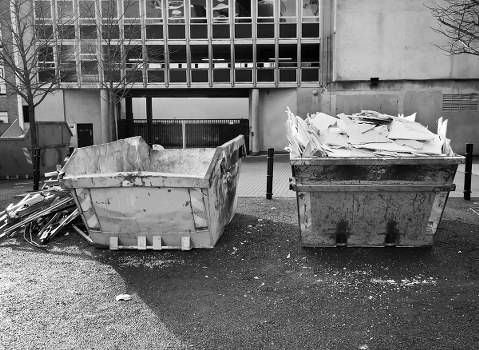 Commercial Waste Disposal London operates with a clear sustainability mission across the capital. We have set a bold recycling percentage target: to achieve 70% commercial recycling by 2030 across our contracts, focusing on reduction, reuse and recovery. This target reflects the urgency of cutting landfill and supporting boroughs' own waste separation programmes while delivering reliable commercial waste services in London.
Our London commercial waste disposal fleet has been modernised to lower emissions and improve efficiency. We operate a mix of low-carbon vans and hybrid collection vehicles, and ongoing investment means more electric and Euro-6 vehicles replace older diesel rigs. Low-carbon vans reduce local air pollution in busy town centres and enable quieter early-morning collections for businesses across multiple boroughs.
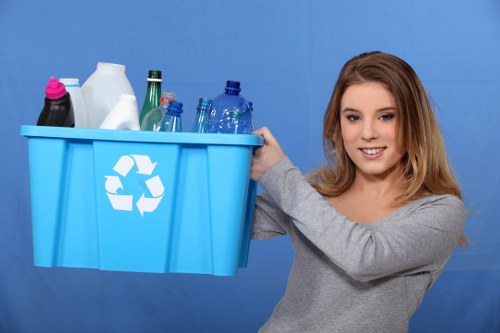 We coordinate closely with local transfer stations, consolidating loads to maximise recycling rates and minimise mileage. Transfer facilities in north, east and south London are integrated into our route planning so that mixed dry recycling, food waste, paper, cardboard and segregated organics are delivered to the right processing centres. Many boroughs now require businesses to separate paper, cardboard and mixed packaging at source — a practice we support through tailored collections and onsite training.
Partnerships with charities and social enterprises are at the heart of our reuse strategy. We work with local donation networks and nonprofit refurbishment projects to divert commercial furniture, textiles and usable equipment from the waste stream. By collaborating with trusted charity partners, businesses can turn surplus stock into social value, support community projects and reduce their carbon footprint.
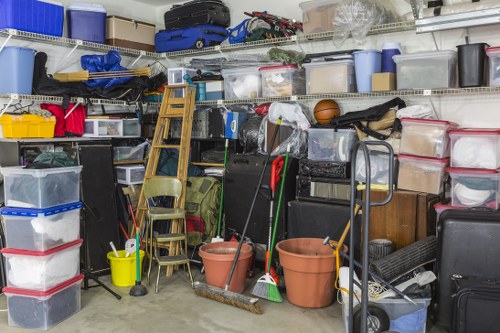 Commercial waste services London emphasise segregation at source: separating organics, glass, cans, plastics and paper helps processors recover higher quality materials. This approach mirrors borough-level schemes — for example, several London boroughs operate separate food waste collections and encourage businesses to use dedicated containers for compostable material. We assist clients to align with local rules so collections integrate seamlessly with council recycling policies.
Our network approach includes targeted sorting, consolidation and transfer to specialist recycling centres. Activities include:
- Paper and cardboard baling for high-grade recycling
- Metal, glass and plastic segregation for commodity recovery
- WEEE (electronic) collection routed to authorised processors
- Textile and furniture reuse programmes run with local charities
Measuring Impact and Driving Down Carbon
We publish regular environmental performance summaries for our contracts and use data-driven route optimisation to reduce empty miles. By leveraging telematics and scheduling software, our commercial waste disposal teams in London can cut fuel use and emissions while increasing the percentage of material recycled. Monitoring performance allows businesses to see progress toward the 70% recycling target and helps councils meet their municipal goals.
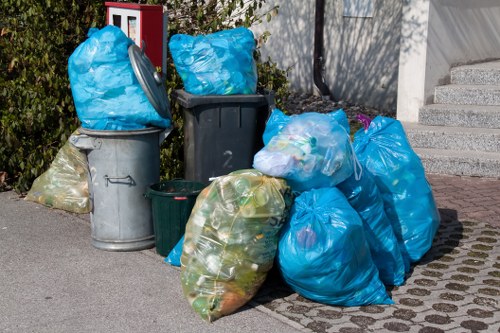 Resource recovery is supported by a growing network of transfer stations and materials recovery facilities (MRFs) across the city. We coordinate with council-operated sites and private transfer yards to ensure materials are sent to the right processor quickly, reducing contamination and improving recycling yields. This collaborative model helps align our operations with borough-specific separation rules — for example, some boroughs require rigid plastics to be kept separate from mixed recycling, while others prioritise separate glass collections.
Sustainable Collections, Circular Outcomes
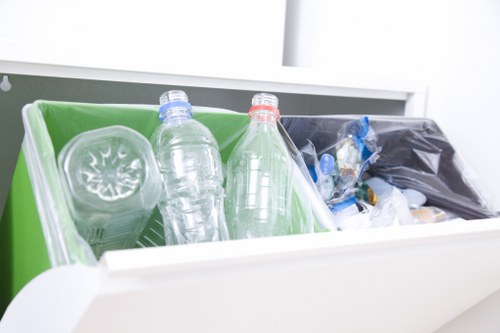 Our approach to sustainable commercial waste handling in London combines technology, partnerships and behaviour change. We run targeted engagement sessions (without being prescriptive guides) to help staff understand the practical steps for segregating waste. The benefits are tangible:
- Lower disposal costs through reduced residual waste
- Higher recycling yields from cleaner, source-separated streams
- Social value from charity partnerships and reuse
- Reduced emissions via low-carbon vans and optimised routing