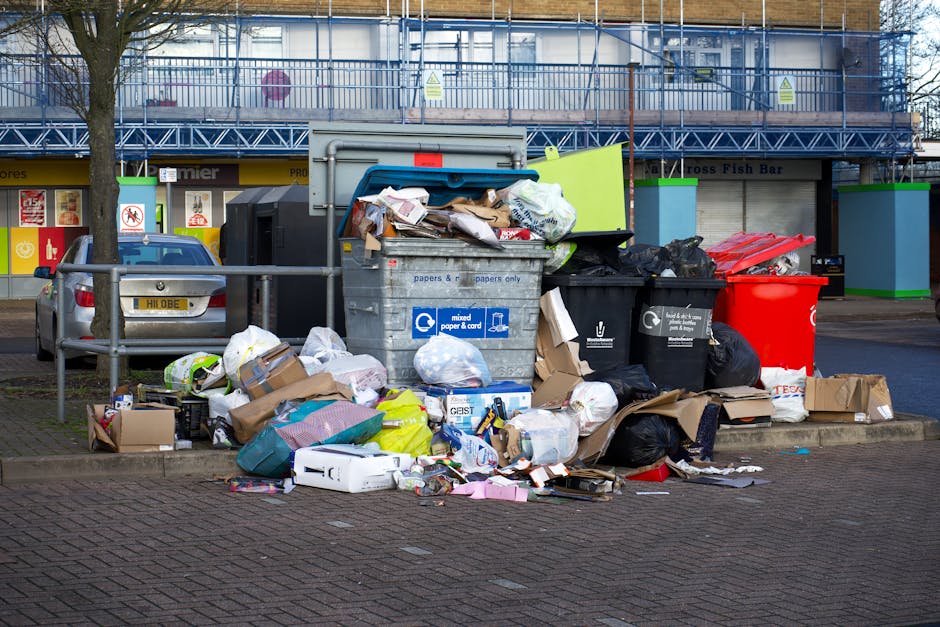
Hackney Wick bulky rubbish collection tips for creatives
If you work in Hackney Wick, you already know the rhythm: one week it's a film prop build, the next it's canvases, offcuts, packaging, set pieces, broken shelving, or a sofa that has seen better days. This is where Hackney Wick bulky rubbish collection tips for creatives become genuinely useful. Not the glossy, vague kind. The practical kind that helps you clear space without derailing a deadline, upsetting neighbours, or turning your studio into a temporary landfill.
Creatives tend to accumulate awkward waste in awkward ways. Large objects. Mixed materials. Things that are half-finished but too big to ignore. And because time is usually tight, the cleanup job gets pushed to "later", which is usually the worst possible moment. This guide breaks down how to handle bulky rubbish sensibly in Hackney Wick, what to do before collection day, and how to make better decisions when your workspace is full of oversized clutter that simply has to go.
There's a better way to do this, honestly. A calmer way. Less panic, less mess, fewer last-minute scrambles down a narrow stairwell with a dismantled table under one arm.
Table of Contents
- Why Hackney Wick bulky rubbish collection tips for creatives matters
- How Hackney Wick bulky rubbish collection tips for creatives works
- Key benefits and practical advantages
- Who this is for and when it makes sense
- Step-by-step guidance
- Expert tips for better results
- Common mistakes to avoid
- Tools, resources and recommendations
- Law, compliance, standards, or best practice
- Options, methods, or comparison table
- Case study or real-world example
- Practical checklist
- Conclusion
- Frequently asked questions
Why Hackney Wick bulky rubbish collection tips for creatives Matters
Hackney Wick has a very particular energy. It's full of studios, makers, small businesses, shared workspaces, and homes where "just one more thing" can turn into an entire corner of bulky waste. That matters because bulky items are not like everyday bin waste. They take up real space, can be awkward to move, and often need a bit of planning before anyone can safely take them away.
For creatives, the waste itself is often mixed and irregular. A normal household might clear a wardrobe or old mattress. A creative space might need to shift timber cut-offs, exhibition plinths, broken chairs, packaging from a materials order, foam board, installation pieces, and a fridge that stopped working halfway through a project. That mix changes the approach. It also changes the risk.
Leave bulky rubbish sitting around and it starts to affect how you work. It blocks access. It eats floor space. It can become a trip hazard. Sometimes it just lowers the mood, which sounds soft until you've been trying to finish a print run while stepping around a dead desk lamp for three days. To be fair, clutter has a funny way of stealing momentum.
There's also the local angle. In a busy area like Hackney Wick, you need to think about access, timing, neighbours, loading points, and how visible your waste is from the street. The smoother your rubbish collection plan, the less stress you create for everyone around you.
Expert summary: For creative spaces, bulky rubbish collection works best when you separate, sort, and schedule early. The cleaner the prep, the easier and safer the removal.
How Hackney Wick bulky rubbish collection tips for creatives Works
Bulky rubbish collection usually starts with a simple question: what are you actually getting rid of? That sounds obvious, but in practice it's the step people skip. A collection team needs to know whether you have furniture, mixed commercial waste, white goods, construction offcuts, or a few oversized items that can be moved manually. The answer affects the vehicle, the labour needed, and sometimes the method of disposal.
For creatives, this can include things like:
- studio furniture and storage units
- set pieces and display stands
- damaged materials and props
- old mattresses or sofas in live-work spaces
- bulk packaging from deliveries
- broken appliances from shared kitchens or studios
The process is usually straightforward. You list the items, confirm access, agree a collection time, and make sure the waste is ready to move. But the devil is in the details. A large item collection is much easier when everything is already separated and nothing is hidden under a pile of offcuts or cables.
In some cases, a bulky waste collection is the best fit. In others, creative spaces may need a more tailored service such as furniture removal and collection, office clearance, or a broader waste clearance approach if the room has become a bit of everything all at once.
One thing people often forget: access matters as much as volume. A single bulky item on a second floor with a narrow staircase can take more time than three items stacked by a loading bay. It's not glamorous, but that's the real-world bit that saves money and hassle.
Key Benefits and Practical Advantages
When bulky rubbish is handled properly, the payoff is immediate. You get your floor back, your team can breathe again, and the space starts working for you instead of against you. Simple, but powerful.
Here are the main benefits creative businesses and studios notice first:
- More usable space: Clear floor space means better movement, easier set-up, and fewer bottlenecks.
- Safer working conditions: Fewer trip hazards and fewer sharp edges lying around.
- Better presentation: If clients, collaborators, or visitors are coming through, the space looks intentional rather than overwhelmed.
- Less downtime: A well-planned collection means less disruption to work hours.
- Cleaner recycling decisions: Sorting items early can keep reusable or recyclable materials out of general waste.
There's also a less obvious benefit: mental clarity. Creative work can be messy by nature, yes, but there's a point where visual clutter starts competing with your attention. You'll notice it when every task takes longer because you keep moving things out of the way. That's usually the signal to act.
If your space regularly changes shape - one week studio, next week pop-up, then storage, then venue - a routine rubbish removal plan is far more efficient than waiting for a major clear-out. It keeps the big jobs smaller. Which is just nicer, really.
Who This Is For and When It Makes Sense
This topic is especially relevant if you're one of the many people in Hackney Wick working in fast-moving, space-sensitive environments. Not everyone needs the same collection approach, and that's worth saying upfront.
You're likely the right audience if you are:
- a painter, sculptor, designer, or maker with bulky materials on site
- a photographer or film team storing props, frames, set pieces, or lighting cases
- a small agency or studio moving out old desks, chairs, and storage
- a shared workspace manager dealing with abandoned items
- a landlord or property manager clearing a creative unit between tenants
- a home-based creative trying to get rid of oversized clutter without losing a weekend
It also makes sense when you are:
- moving studios or reducing your footprint
- preparing for an exhibition or installation
- clearing a damaged item after a project finishes
- replacing furniture to refresh the studio layout
- dealing with waste that is too awkward for normal collections
Truth be told, this is often the point where people realise "bulk waste" is not just a household phrase. A creative business can produce the same practical headaches as a small office or light workshop. If that sounds familiar, you're in the right place.
Step-by-Step Guidance
If you want the smoothest outcome, don't start with the collection itself. Start with a small, honest inventory. Then work forwards from there. That makes everything less chaotic.
1. Walk the space and identify every bulky item
Do a slow lap of the studio, flat, workshop, or storage room. Write down the large items and take a quick photo of anything awkward. If something is split into parts, note that too. A shelf unit and six loose panels are not the same thing, even if they've become emotionally attached to each other over time.
2. Separate reusable, recyclable, and disposable items
Creatives are usually good at repurposing things, which is brilliant. But not everything should be kept "just in case." Put usable materials aside for reuse, then group recyclable materials where possible. Mixed waste is harder to handle, so a little sorting here can make a big difference later.
3. Measure access, not just waste volume
Check stair widths, lift size, doorway clearance, and loading access. If you've got a narrow corridor or a shared entrance, mention it early. Collections often run more smoothly when the route out is clear and predictable.
4. Decide whether items need dismantling
Some furniture and studio fixtures are much easier to move in parts. If it can be safely taken apart, do it before collection day. Keep screws and fittings in a labelled bag if there's any chance of reuse. Small thing, but it saves confusion later.
5. Book the right type of collection
If your waste is mainly furniture, a furniture-specific service may be enough. If it's a mix of items from a studio clear-down, a broader bulky waste or full clearance service may be better. For spaces with lots of mixed rubbish, commercial waste collection can be a sensible option, especially where business-generated waste needs a more structured approach.
6. Stage the items in one accessible area
Gather the waste in a single location only if that's safe and practical. Don't block fire exits or shared walkways. The aim is to make loading quick, not to create a new obstacle course.
7. Confirm timing and stay available
Collections in busy parts of London can be affected by traffic, loading restrictions, or other site issues. Be reachable on the day. A five-minute delay can become a bigger delay if nobody can confirm access or explain where to park. And yes, that really does happen more often than people expect.
8. Check the space after removal
Once the bulky rubbish is gone, do a quick sweep for fixings, splinters, packaging, and stray sharp bits. This final check is worth it. You want a clear space, not just a visually improved one.
Expert Tips for Better Results
A few small decisions make a large difference. The best collections are usually the ones prepared by someone who understands how creative spaces actually function day to day.
Tip 1: Treat collection day like a mini production schedule. Set a time window, assign a person to point out items, and make sure someone knows where every bulky piece is located. That cuts down on drift and confusion.
Tip 2: Keep valuable reuse items clearly separate. It's easy for useful timber, fixtures, or display hardware to be mistaken for rubbish if they're sitting next to damaged material. Mark them off and move them away from the collection zone.
Tip 3: Use photography for awkward waste. A quick photo helps when you're explaining a mixed pile, unusual fixture, or bulky item that doesn't fit a standard description. It also helps avoid "actually, it's bigger than that" surprises.
Tip 4: Plan around your busiest creative hours. If your best work happens in the morning, don't schedule a disruptive clear-out then unless you absolutely have to. Protect your productive hours where you can.
Tip 5: Don't wait until the pile becomes a problem. This is the one that catches people out. A little waste is manageable. A lot of waste becomes a whole mood. Book earlier than you think you need to.
Tip 6: Ask about mixed waste handling. Creative spaces often generate waste that isn't neatly one category. If you've got a blend of furniture, packaging, wood, and fittings, make sure the collection method suits that reality rather than forcing it into a box it doesn't fit.
Tip 7: Keep neighbours in mind. In a shared building, noisy loading, blocked access, or items left in corridors can create friction fast. Being considerate here goes a long way. It's not just polite, it's smart.
Common Mistakes to Avoid
Most bulky waste problems are avoidable. The recurring mistakes are usually pretty familiar, and they tend to show up when people are in a rush.
- Leaving everything until the last minute. This often leads to rushed decisions and poor access planning.
- Mixing reusable items with true waste. You may accidentally throw out things that could have been used again or passed on.
- Not checking access properly. A narrow staircase or awkward loading point can slow the whole job down.
- Assuming all bulky items are treated the same. Furniture, appliances, and mixed studio waste can need different handling.
- Blocking shared spaces. Corridors and entrances are not temporary storage.
- Ignoring heavy or sharp hazards. Broken frames, glass, metal fixings, and splintered timber can cause injuries if no one plans for them.
- Forgetting what is business waste. If the items came from a commercial activity, treat them accordingly and choose a service that fits.
One mildly annoying truth: the mess always looks smaller until you start moving it. Then it suddenly doubles. Funny how that works. Not funny, obviously, but you know what I mean.
Tools, Resources and Recommendations
You do not need a warehouse full of kit to manage bulky rubbish properly. A few basic tools and habits are usually enough.
- Marker pens and labels: Useful for separating reuse, recycling, and disposal piles.
- Tape measure: Helps check doorways, lifts, and item dimensions before collection.
- Heavy-duty gloves: A simple way to reduce cuts and scrapes while sorting.
- Sturdy sacks or boxes: Handy for small mixed bits, screws, fixings, and offcuts.
- Phone camera: Great for recording awkward items and sharing accurate descriptions.
- Trolley or sack truck: Helpful if the route is long or the items are too heavy to carry safely by hand.
On the service side, it can help to know the differences between waste types. For example, furniture disposal is often the right route for chairs, desks, tables, and shelving, while large item collection can be useful when you have a smaller number of oversized pieces. If the job is broader and the space needs a reset, property clearance may be the more efficient option.
And if sustainability matters to your practice - which, for many creatives, it absolutely does - ask how items are handled after collection. A thoughtful recycling and sustainability approach is often the difference between a clear space and a clear conscience. Nice when both happen at once.
Law, Compliance, Standards, or Best Practice
If your bulky rubbish comes from a business, studio, workshop, or commercial activity, you need to think beyond convenience. In the UK, business waste carries responsibilities around proper handling, transfer, and disposal. The exact details can vary depending on the waste type and how it is produced, so it is sensible to stay cautious and work with a provider that understands commercial waste expectations.
Best practice usually includes:
- separating waste sensibly before collection
- using a provider that can handle the waste type you have
- avoiding illegal dumping or handing waste to anyone who cannot explain where it goes
- keeping records where appropriate, especially for business-generated waste
- protecting staff, contractors, and neighbours from avoidable risk
Safety matters too. Heavy items, awkward lifting, broken fittings, and tight access can all cause injuries if rushed. If something feels too heavy, too sharp, or too awkward, do not force it. That sounds obvious until you are mid-clearance and trying to be heroic for no reason.
For businesses and creative studios, it can also help to review basic service standards such as insurance, safety procedures, and clear pricing. Those details may not feel exciting, but they are exactly what you want when something goes slightly sideways. And something always does, eventually.
Options, Methods, or Comparison Table
Choosing the right collection method depends on what you are clearing, how much time you have, and how access works on site. Here is a simple comparison to help you think it through.
| Option | Best for | Pros | Watch out for |
|---|---|---|---|
| Bulky waste collection | A few large items or a moderate mixed load | Simple, targeted, efficient | May not suit larger studio clear-outs |
| Furniture removal and collection | Desks, chairs, shelving, sofas, tables | Good for studio refits and furniture swaps | Less ideal if waste is mixed with other materials |
| Commercial waste collection | Business-generated waste from creative premises | Better for ongoing or work-related waste handling | Requires clearer sorting and planning |
| Full clearance service | Studio moves, end-of-tenancy clear-outs, mixed clutter | Fastest when a space needs a full reset | May be more than you need for a small load |
If you are torn between options, ask yourself one question: are you clearing one problem item, or resetting the whole space? That answer usually points you in the right direction. Quietly useful, that one.
Case Study or Real-World Example
Picture a small Hackney Wick studio used by a designer, a photographer, and a maker who shares the space three days a week. By Friday afternoon, the room has a wobbly table, two damaged display plinths, several boxes of packaging, an old office chair, and a broken cabinet that nobody wants to deal with. Classic creative chaos. Nothing dramatic, just the kind that grows while everyone focuses on actual work.
Instead of waiting for the clutter to become unmanageable, they do three things. First, they separate anything reusable, including a few timber offcuts and a shelf bracket set. Second, they move the bulky waste near the easiest exit route without blocking the shared corridor. Third, they send accurate photos and item details before collection day so the right removal plan is arranged.
On the day, the collection is quicker because there are no surprises. The team can see the items, access is clear, and the studio gets its space back the same day. The result is not just tidier. The next shoot starts on time, the maker has a clean corner to work in, and nobody spends the weekend doing heavy lifting when they would rather be making things.
That is the real value here. Not just disposal. Momentum.
Practical Checklist
Use this checklist before your bulky waste collection day. It keeps things calm, and calm is underrated.
- Identify every bulky item that needs removing
- Separate reusable items from true waste
- Group similar materials where possible
- Check access routes, stairwells, doors, and loading points
- Measure anything especially large or awkward
- Dismantle items safely if that makes removal easier
- Label anything valuable that should not be taken
- Clear corridors, exits, and shared walkways
- Take photos of unusual or mixed items
- Confirm timing and keep someone available
- Remove small loose debris after collection
- Review what could be reused or recycled next time
If you want a quick rule of thumb: the more preparation you do before the truck arrives, the less disruption you'll feel during the day. Sounds basic. It is basic. But it works.
Conclusion
Hackney Wick bulky rubbish collection does not need to be a scramble. For creatives, the best results come from a simple mix of planning, sorting, and choosing the right collection method for the kind of waste you actually have. When you work that way, you protect your time, keep your space usable, and avoid the messy little problems that build up around a studio or workspace.
If there is one takeaway, it is this: do not wait until the room feels unworkable. A small, organised clear-out now is nearly always easier than a rushed rescue later. And your future self - the one trying to start a project at 9am with a clear floor and a clear head - will absolutely thank you for it.
Get a free quote today and see how much you can save.
Frequently Asked Questions
What counts as bulky rubbish in a creative studio?
Bulky rubbish usually means large items that are awkward to move or too big for normal bins. In a creative studio, that might include desks, chairs, shelving, set pieces, display boards, old props, and damaged fixtures.
Do I need a different service for furniture and mixed studio waste?
Often, yes. Furniture-only loads can be simpler, while mixed studio waste may need a broader collection or clearance service. If your waste includes timber, packaging, fittings, and furniture all together, it is worth matching the service to the actual load.
Can I leave bulky items outside for collection?
Only if it is safe, permitted, and properly arranged. In shared buildings or busy streets, leaving items out can create access problems or complaints. It is usually better to confirm the safest staging point first.
How do I reduce the cost of bulky rubbish collection?
Sorting items in advance, separating reusable materials, and giving accurate access details can all help keep things efficient. In general, the less time spent on site and the fewer surprises on the day, the smoother the job tends to be.
What should creatives do with reusable materials?
Set them aside clearly before collection. Timber offcuts, hardware, fixtures, and usable furniture can sometimes be repurposed, donated, or stored for future work. Just make sure they are separated from actual waste so nothing useful disappears by accident.
Is bulky rubbish from a studio treated as business waste?
Usually, yes, if it comes from a business, studio, or commercial activity. That means you should think about proper handling and disposal rather than treating it exactly like household rubbish. When in doubt, ask the provider how they deal with business-generated waste.
How much notice should I give before booking?
As much as you reasonably can. The more notice you give, the easier it is to plan access, timing, and the right level of service. If your project timetable is tight, book earlier rather than later.
What happens if my waste includes broken glass or sharp materials?
Those items need careful handling. Pack and label them safely where possible, and mention them before collection so they can be handled appropriately. Do not leave sharp edges loose where someone could get hurt.
Can I combine furniture disposal with other clearance work?
Yes, often you can. If you are clearing a room, moving out of a studio, or refreshing a workspace, combining services can be more efficient than booking separate visits. It depends on the mix of items and the scale of the job.
How do I know whether to choose bulky waste collection or full clearance?
If you are dealing with a few large items, bulky waste collection may be enough. If the whole space needs resetting, or the waste is spread across different materials and rooms, a fuller clearance option is usually the better fit.
Why is Hackney Wick such a tricky area for rubbish collection?
Because many creative spaces are in shared, compact, or repurposed buildings. Access can be tight, loading may be awkward, and waste types can be mixed. A little local planning goes a long way here.
What is the biggest mistake people make with bulky rubbish?
Leaving it until the job becomes urgent. That is when sorting slips, access gets overlooked, and items that could have been reused are simply pushed into disposal. A bit of planning makes the whole process easier, and honestly, less irritating.
When your studio is clear, the work feels lighter. That is usually the real goal, isn't it?